
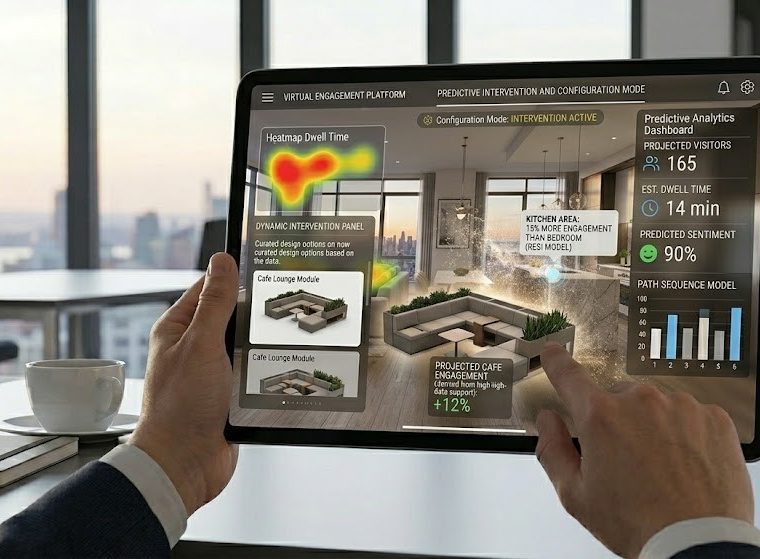
Choosing a new home is one of the most significant financial decisions most people will ever make. Yet many property buyers are still expected to rely on static images, floor plans, and written descriptions when evaluating developments that may not even be completed. As buyer expectations continue to evolve, developers are increasingly turning to innovative digital tools that help customers better understand and experience a property before making a commitment.
Modern buyers expect a digital-first experience
Today’s consumers are accustomed to researching products online, comparing options instantly, and accessing information whenever they need it. The real estate market is no exception. Prospective buyers want to explore properties on their own schedule, from any location, and using any device.
As a result, developers and sales teams are looking for solutions that provide more engaging and informative presentations than traditional brochures or image galleries. Interactive property technology allows buyers to explore projects in greater detail while helping developers communicate their vision more effectively.
Visualizing a property before it exists
One of the biggest challenges in residential development is selling properties before construction has been completed. Architectural plans and renderings can provide useful information, but they often require buyers to imagine how the final project will actually look and feel.
A Photorealistic 3D Real Estate App helps eliminate much of this uncertainty by presenting future developments in a highly realistic and interactive format. Buyers can explore buildings, surroundings, and individual units in a way that feels far more tangible than viewing static marketing materials.
This ability to visualize a future property can significantly improve buyer confidence during the decision-making process.
Creating stronger emotional connections with buyers
Real estate purchases are influenced by both practical considerations and emotional responses. Buyers often want to imagine themselves living in a particular space, enjoying the view from a balcony, walking through common areas, or spending time with family in their future home.
Interactive 3D experiences help create these emotional connections by providing a realistic representation of the finished development. Instead of interpreting technical plans, buyers can focus on understanding how the property aligns with their lifestyle and expectations.
This deeper level of engagement can help a development stand out in a highly competitive market.
Supporting sales teams with better presentation tools
Property sales professionals are frequently tasked with explaining complex projects, comparing multiple units, and answering detailed questions from prospective buyers. Having access to advanced visualization tools makes these conversations more productive and efficient.
Rather than relying solely on verbal explanations, sales representatives can demonstrate apartment layouts, building locations, available views, and project amenities directly within an interactive environment. This helps reduce misunderstandings and allows clients to make more informed decisions.
It also creates a more professional and memorable sales experience.
Improving remote property presentations
Many buyers begin their property search online and may not be able to visit a sales office immediately. International investors, buyers relocating from another city, and busy professionals often prefer to gather information remotely before scheduling a meeting.
Interactive 3D applications support this behaviour by providing a comprehensive digital presentation that can be accessed from anywhere. Prospective clients can review developments at their own pace, revisit key details, and share information with family members or advisors involved in the purchase decision.
This flexibility supports both buyers and sales teams throughout the purchasing journey.
Helping developers stand out in a competitive market
Residential developments compete not only on price and location but also on presentation quality. Projects that communicate their value clearly and professionally often generate stronger buyer interest and higher engagement.
By adopting advanced visualization technologies, developers can differentiate their investments and create a more modern customer experience. Interactive presentations demonstrate innovation, transparency, and a commitment to helping buyers understand exactly what they are purchasing.
In an increasingly crowded market, these advantages can play an important role in attracting qualified leads and supporting long-term sales performance.
The future of property sales is immersive
As digital technologies continue to shape consumer expectations, immersive property presentations are becoming a natural part of modern real estate marketing. Buyers want more information, better visualization, and greater confidence before making a purchase.
Developers who embrace photorealistic and interactive tools can provide a richer experience that benefits both sales teams and customers. By making complex projects easier to understand and more engaging to explore, these solutions help transform how properties are marketed and sold in today’s competitive real estate landscape.